
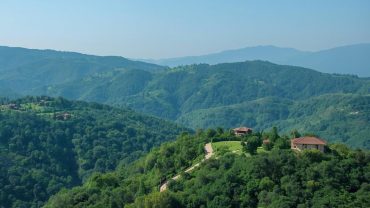
Mahabaleshwar—one of Maharashtra’s most iconic hill stations—has always attracted travelers for its cool climate, cascading valleys, berry farming culture, serene villas, and stunning viewpoints. But beyond its tourist charm, Mahabaleshwar also hides one of India’s most fascinating natural secrets: fog forests that capture invisible water from the atmosphere.
This unique phenomenon has shaped the region’s ecology, farming, hotels, travel economy, and even the way locals survive harsh summers. Fog harvesting—performed naturally by forests—plays a crucial role in sustaining water in Mahabaleshwar’s ecosystem. These forests perform a function similar to man-made fog nets seen in Chile, Peru, and Morocco, but nature does it more efficiently and at a much larger scale.
This article dives deep into the science, geography, climate influence, ecological role, and future of fog-water capture in Mahabaleshwar. It explores how fog forests act as water collectors, how they influence berry farming and local agriculture, and how this invisible water supports travelers, hotels, villas, and entire communities that depend on Mahabaleshwar’s lush environment.
What Are Fog Forests?
Fog forests—also called mist forests or cloud forests—are ecosystems where trees frequently come in contact with fog or low-lying clouds. These forests are typically found on mountain slopes where cool air meets warm air, causing moisture to condense.
In Mahabaleshwar, fog forests appear prominently during monsoons and winters, often covering the Western Ghats with a mystical, floating curtain of white. But what looks like simple fog is actually a hidden reservoir of atmospheric moisture. These forests literally pull water out of the air and convert it into liquid that replenishes streams, soil moisture, and underground aquifers.
How Fog Forests Capture Invisible Water: The Science Explained
Fog water capture happens through a process called fog interception. When fog passes through the dense canopy of Mahabaleshwar’s forests, tiny water droplets in the air collide with leaves, twigs, mosses, and bark textures. These droplets combine, gather weight, and eventually drip to the ground.
Here’s how the process works biologically:
- Fog droplets hit the forest canopy.
The tiny droplets (10–20 micrometers) are too small to fall as rain but cling to surfaces. - Leaves and moss absorb the droplets.
The natural roughness of leaves in Mahabaleshwar’s forests increases fog-water retention. - Water drips down the tree trunks.
This is called stemflow, a major contributor to groundwater. - Water accumulates on the forest floor.
The thick leaf litter acts like a sponge. - Streams and soil moisture get recharged.
This is crucial during non-rainy months.
Fog interception provides 20% to 60% additional water to Mahabaleshwar’s ecosystem depending on the season.
Comparison of Fog Water vs Rainwater in Mahabaleshwar
| Parameter | Rainwater | Fog Water |
| Droplet size | Large (1000+ microns) | Tiny (10–20 microns) |
| Source | Clouds precipitating | Fog trapped by vegetation |
| Occurrence | Monsoon-heavy | Winter & monsoon |
| Collection method | Natural rainfall | Canopy interception |
| Contribution to streams | High | Moderate but crucial in dry months |
| Purity Level | Clean | Very clean and high in minerals |
Why Mahabaleshwar Is a Natural Fog-Harvesting Zone
Mahabaleshwar’s geography is what makes fog forests flourish. Sitting at 1,372 meters above sea level, surrounded by deep valleys and facing the Arabian Sea winds, the region experiences one of the highest fog densities in India.
Major geographical features that support fog formation:
- High altitude plateau formation
- Western Ghats wind barrier effect
- Moist sea winds from the Arabian Sea
- Forest density providing condensation surfaces
- Deep valleys acting as fog funnels
Because of this, Mahabaleshwar becomes a natural fog harvesting system for 4–6 months a year.
Fog Forests and Mahabaleshwar’s Water Economy
Mahabaleshwar is one of India’s rainiest spots—but ironically, it faces water shortages during peak summers. Fog forests balance the water cycle by providing a steady, slow-release water source even during dry months.
Fog water supports:
- Local agriculture, especially berry farming
- Hotels and villas, which rely on steady water supply for travelers
- Drinking water sources for villages
- Forest biodiversity
- Underground aquifers that feed rivers Krishna, Venna, Savitri
Without fog interception, Mahabaleshwar would lose up to 30% of its natural water recharge.
Seasonal Water Recharge in Mahabaleshwar
| Season | Rainwater Contribution | Fog Water Contribution | Notes |
| Monsoon (Jun–Sep) | Very High | Moderate | Fog adds stability to soil moisture |
| Post-Monsoon (Oct–Dec) | Low | High | Fog becomes major water source |
| Winter (Jan–Feb) | Very Low | Moderate | Helps prevent drought |
| Summer (Mar–May) | Minimal | Minimal | Stored fog water supports ecosystem |
Impact of Fog Forests on Mahabaleshwar’s Famous Berry Farming
Mahabaleshwar is known across India as the capital of strawberry and berry farming. But few realize that fog forests indirectly support these farms by stabilizing moisture levels.
How fog forests help berry farming:
- Maintain cooler temperatures required for strawberry cultivation
- Provide moisture-rich microclimates
- Reduce evaporation from fields
- Support spring water used for irrigation
- Maintain soil structure and nutrient cycles
Fog-harvested moisture can improve crop survival during dry spells, reducing the cost of irrigation for farmers.
Fog Forest Benefits for Local Farming
| Farming Benefit | Impact Level | Explanation |
| Temperature control | High | Fog cools farm areas naturally |
| Soil moisture | Very High | Helps berries grow well |
| Reduced evaporation | High | Essential for water conservation |
| Nutrient cycling | Moderate | Moisture helps organic decomposition |
| Irrigation support | High | Springs recharged by fog |
How Fog Forests Influence Tourism, Hotels, and Local Travel Economy
Fog is not just a natural phenomenon—it’s an attraction. Travelers love Mahabaleshwar’s foggy viewpoints, especially in monsoon and winter. This significantly boosts hotel bookings, villa stays, and travel experiences.
Ways fog supports Mahabaleshwar’s tourism:
- Creates mystic views at points like
- Arthur’s Seat
- Kate’s Point
- Elephant’s Head Point
- Attracts photographers
- Encourages monsoon tourism
- Enhances villa stays with mist-filled mornings
- Supports nature-based trips like trekking and forest tours
Hotels advertise foggy valley views, misty mornings, and cloud-touching balconies as premium features for travelers.
List of Key Ecological Functions of Fog Forests
- Provide continuous water even without rainfall
- Balance the region’s microclimate
- Prevent soil erosion on steep ghats
- Support rare species like Malabar Giant Squirrel
- Enable berry farming and vegetable farming
- Replenish river sources
- Maintain humidity for evergreen forests
- Work as natural air purifiers
- Prevent forest fires by retaining moisture
Threats to Fog Forests in Mahabaleshwar
Despite their importance, fog forests are under pressure from:
- Deforestation for tourism
- Uncontrolled construction of hotels and villas
- Changes in climate affecting fog frequency
- Pollution reducing canopy efficiency
- Fragmented forest patches
If fog forests decline, Mahabaleshwar’s entire hydrological balance will be disrupted.
The Future of Fog Harvesting in Mahabaleshwar
Researchers are now exploring the addition of fog nets in strategic zones. These nets mimic nature, capturing fog droplets using mesh surfaces. Combined with natural forests, this could create a hybrid water system that helps:
- Farmers
- Local communities
- Hotels during peak season
- Sustainable tourism operators
Fog harvesting could become a model for other hill stations facing water shortages.
Conclusion
Mahabaleshwar’s fog forests are more than enchanting natural landscapes—they are life-givers. By capturing invisible water from the atmosphere, they support berry farming, villas, hotels, streams, wildlife, and the entire travel economy of the region. Understanding, protecting, and enhancing fog-water harvesting systems is crucial for Mahabaleshwar’s sustainable future.
These forests are nature’s silent engineers, working year-round to ensure the region remains green, fertile, and magical for every traveler who visits.
FAQs
1. What are fog forests in Mahabaleshwar?
Fog forests are areas where trees frequently interact with fog, capturing moisture directly from the air and converting it into usable water.
2. How does fog contribute to farming in Mahabaleshwar?
Fog increases soil moisture, cools the climate, and supports spring water, making it essential for strawberry and berry farming.
3. Does fog help hotels and villas in the region?
Yes. Fog stabilizes water supply and enhances the tourist experience, improving hotel bookings during foggy seasons.
4. Is fog harvesting a new concept?
While scientists are developing fog nets, natural fog harvesting through forests has existed in Mahabaleshwar for centuries.
5. How can fog forests be protected?
By reducing deforestation, controlling construction, promoting eco-tourism, and supporting community-based conservation programs.
References and Links
- Government of Maharashtra: Western Ghats Biodiversity Reports
- Indian Institute of Tropical Meteorology (IITM), Pune – Fog and Climate Studies
- UN Environment Programme – Fog Water Harvesting Research
- www.gomahabaleshwar.com – Official Booking Website
- Mahabaleshwar Tourism Board – Official Travel Resources


Comment (0)